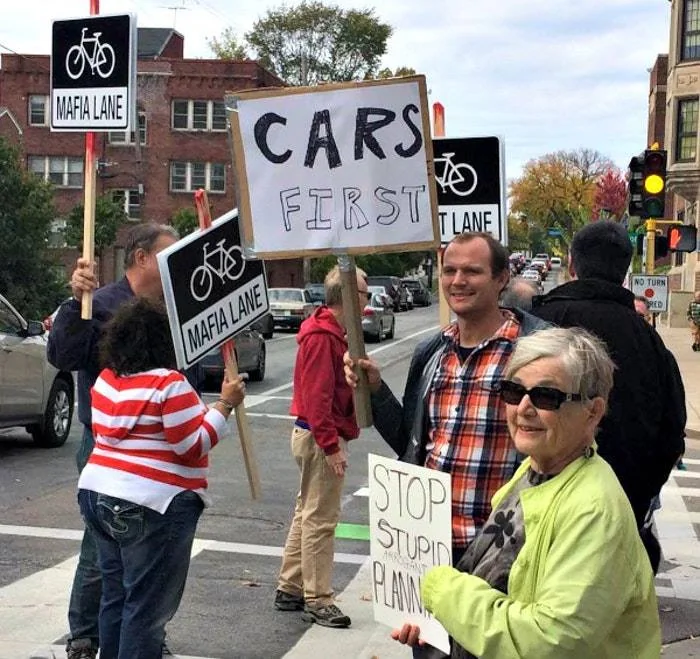
MATTER 01 OF 04
IN RE: LANE OCCUPANCY · OFFICE OF CORRIDOR CAPACITY
The Bureau seeks the orderly relocation of bicycle traffic to dedicated corridors, pending completion of Environmental Impact Statement AAR-EIS-004 (Peloton Drag Coefficients).
THE BUREAU OF ROAD FAIRNESS — PUBLIC PORTAL
Americans Against Road BikersAssociation of America
PORTIONS OF THIS NAME REDACTED UNDER EXEMPTION (b)(6) — PERSONAL GRIEVANCE.
SEC. 1 — STATEMENT OF GRIEVANCES
YOU'VE SEEN THEM.
WE'VE ALL SEEN THEM.
You have observed them. So has the Bureau. Cyclists proceeding in close formation along vehicular corridors, each apparently persuaded that the journey carries an environmental significance the Office of Corridor Capacity has been unable to substantiate.
The Bureau notes, without prejudice, a recurring sequence: a carbon-fiber bicycle valued at approximately $5,000 is loaded onto a sport-utility vehicle and conveyed an average of 40 minutes to a preferred route. The Records Division has logged this pattern 1,847 times and finds the accompanying environmental accounting inconclusive.
The phrase "share the road" appears frequently in the public comment record. In practice, the Bureau documents processions of up to 20 vehicles reduced to 12 miles per hour around blind curves, notwithstanding adjacent infrastructure constructed for that express purpose.
On the matter of safety, the Bureau observes that when a cyclist treats a stop sign as advisory, statutory liability nonetheless tends to settle upon the party holding a license plate and a policy of insurance. The Office considers this allocation worth entering into the record.
Claims to the moral high ground are noted and filed. The Bureau's position is narrower: that accountability apply uniformly, and that the resulting policy serve every user of the roadway.
TITLE 1 — ENUMERATED CONCERNS OF THE MOTORING PUBLIC
Some drivers find it frustrating when cyclists occupy vehicle lanes, especially on narrow roads where passing safely is difficult.
Cyclists typically move slower than vehicular traffic, which can create congestion in areas without proper bike infrastructure.
There's a perception that some cyclists ignore traffic laws, like running stop signs or red lights, creating safety hazards.
Building dedicated cycling infrastructure requires public funding that some taxpayers may prefer allocated elsewhere.
Many rural roads lack shoulders or bike lanes, creating potentially dangerous situations when cyclists and vehicles share these roads.
Unlike motorists, cyclists typically don't require licenses or registration, which some view as regulatory inconsistency.
In some communities, tensions exist between drivers and cyclists about road use rights.
In areas with harsh winters or extreme weather, cycling infrastructure may go unused for significant portions of the year.
Bike racks and storage can sometimes take up space in urban areas where parking is already limited.
On narrow roads, groups of cyclists might make it challenging for emergency vehicles to pass quickly.
We're not just complaining—we're taking action! Founded in 2023 by drivers who've hadENOUGH, Americans Against Road Bikers stands up for the forgotten majority: the people who actually pay road taxes.
While cyclists occupy roadway capacity without contributing a measurable share to its funding, the Bureau advances transportation policy grounded in REALITY, not aspiration. We advocate for dedicated bike paths separate from main roads - because safety matters for everyone.
Yes, we believe in "sharing the road"—in a way that makes sense. That means cyclists should have their own infrastructure instead of pretending they're training for the Tour de France on your morning commute. Our common-sense approach demands accountability fromBOTH sides.
When planning communities, we need to recognize the reality: cars, bikes, and pedestrians deserve separate spaces to maximize safety and efficiency for everyone.
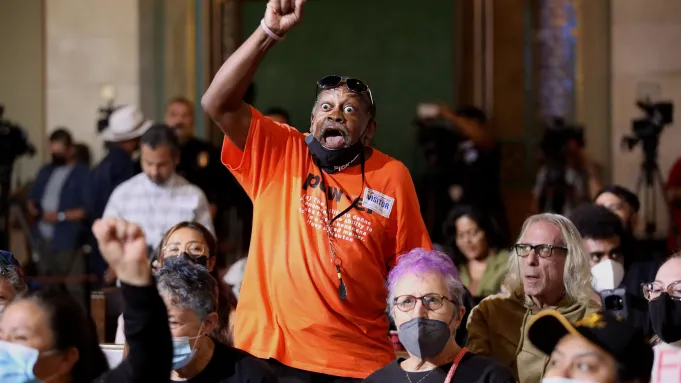
SEC. 2 — ACTIVE MATTERS BEFORE THE BUREAU
The four horsemen of the cycling apocalypse we're fighting every day
The Bureau seeks the orderly relocation of bicycle traffic to dedicated corridors, pending completion of Environmental Impact Statement AAR-EIS-004 (Peloton Drag Coefficients).
The Bureau petitions to codify mandatory reflectors, helmets, and rear-facing identification for road cyclists. Neon apparel is noted for the record but does not, on its own, satisfy the standard.
The Bureau requests appropriations to affirm that red lights and stop signs apply uniformly to all road users, cyclists included. No exemption is on file.
The Bureau weighs one cyclist's asserted right to the roadway against the documented right of fifty motorists to arrive on schedule. The record, to date, favors the majority.
SEC. 3 — REPORTING PERIOD ENDING 06/30/2026
SEC. 4 — RECORDS DIVISION · MEMORANDA LOG
Stay informed about our crusade against road bikers
MEMO 2025-0415-A · APRIL 15, 2025
AARBAA study finds U.S. roads are the largest outdoor spittoon on record: 0.041 fl oz expectorate per rider-mile. The Bureau does not round.
MEMO 2025-0322-A · MARCH 22, 2025
72 hours across 15 intersections: 1,247 signalized non-stops logged, 892 at stop controls. Advocacy groups have requested a redaction.
MEMO 2025-0228-A · FEBRUARY 28, 2025
Bill 477 is now enrolled law. The cycling lobby's objections were entered into the record as performance art and retained per Schedule 7.
SEC. 5 — COMMENTS ENTERED INTO THE RECORD
Real Americans who have joined our movement
FORM AAR-100 — APPLICATION FOR ENROLLMENT
Become a member today and help us reclaim America's roads one bike path at a time!
FORM AAR-100-A — PRELIMINARY INTAKE
REV. 07/2026 · APPROVED FOR PUBLIC USE · FILE IN DUPLICATE
CROSS-REF: FORM AAR-100 — FULL APPLICATION, FEE SCHEDULE, AND MEMBER PRIVILEGES
SEC. 7 — REQUESTS FOR ASSISTANCE
Have questions or want to report a cyclist incident? We're here to help!
PUBLIC COMMENT RECORD · 12 ENTRIES ON FILE
CASE NO. AAR-C-0001
Michael D. — Dallas, TX
CASE NO. AAR-C-0002
Sarah J. — Portland, OR
CASE NO. AAR-C-0003
Thomas R. — Boulder, CO
CASE NO. AAR-C-0004
Jennifer L. — Chicago, IL
CASE NO. AAR-C-0005
Robert M. — Phoenix, AZ
CASE NO. AAR-C-0006
Amanda K. — Seattle, WA
CASE NO. AAR-C-0007
David W. — Austin, TX
CASE NO. AAR-C-0008
Patricia H. — Miami, FL
CASE NO. AAR-C-0009
James B. — Denver, CO
CASE NO. AAR-C-0010
Elizabeth T. — Asheville, NC
CASE NO. AAR-C-0011
William P. — San Diego, CA
CASE NO. AAR-C-0012
Margaret S. — Nashville, TN